Economic growth in the Amsterdam region no longer guaranteed, situation requires 'drastic choices'
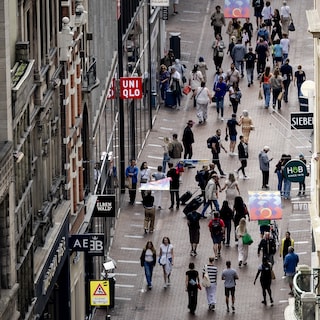
Economic growth in the Amsterdam region is slowing significantly due to infrastructure constraints, labor shortages, and geopolitical risks. The region must now navigate difficult trade-offs regarding land and energy use to maintain its status as a national economic motor.
The Metropolitan Region Amsterdam (MRA) faces a period of cooling economic growth, with projected gains for 2026 and 2027 capped at two percent. According to the Economic Forecast 2026, the region's previous growth lead over the rest of the country has vanished, leaving it vulnerable to geopolitical instability, trade shifts, and environmental factors. Local constraints including severe land scarcity, energy grid congestion, and an aging workforce are intensifying the pressure, forcing a difficult competition for resources between housing, industry, and data centers.
To sustain future prosperity, the report suggests a shift toward knowledge-intensive services while calling for higher labor productivity through innovation and education. Furthermore, the region faces social challenges as the number of households living below the poverty line rises to 69,000. Municipal leaders are urging for ambitious economic policies and increased government investment to address these structural issues. Immediate action regarding the energy transition and infrastructure is described as essential to prevent further long-term economic decline.
Based on reporting by parool. Translated and condensed by LocalHeadlines.