City of Blood review: mostly missed opportunities in a dystopian Berlin and an all-too-familiar climate bubble
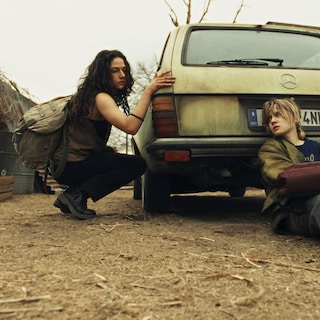
City of Blood is a dystopian series set in a fractured, future Berlin where an elite class lives in a climate-controlled dome amidst political unrest and a vampire threat. The story focuses on two estranged sisters as it blends elements of political drama, social crisis, and horror, though critics have described the result as a disconnected narrative that fails to fulfill its potential.
The German series City of Blood depicts a near-future Berlin transformed into an independent city-state struggling with the aftermath of a pandemic and economic collapse. In this dystopian setting, the wealthy elite isolate themselves within a climate-controlled dome, while the rest of the city faces decay and the rising influence of a populist, anti-immigration political party. The narrative follows two estranged sisters, Bea and Phoebe, whose lives diverged following a childhood tragedy and who now exist on opposite sides of the social divide. Adding to the tension is the existence of a vampire elite that preys on the vulnerable population. Based on the graphic novel Berlinoir, the eight-part series attempts to weave together themes of current political instability, social inequality, and supernatural horror. Despite high production values, critics have argued that the show fails to create a coherent story, relying on tired tropes seen in previous dystopian projects and leaving many plot points underdeveloped.
Based on reporting by parool. Translated and condensed by LocalHeadlines.