ad

If you want start-ups, then help them: Minister Herbert puts demands on the table in Brussels
If you want start-ups, then help them: Minister Herbert puts demands on the table in Brussels

Dutch Minister Heleen Herbert is calling on the European Commission to relax state aid rules that currently prevent governments from subsidizing promising start-ups. Supported by ten other EU member states, she argues that current regulations incorrectly label innovative businesses as struggling, thereby stifling European economic competitiveness.

Dutch Minister of Economic Affairs Heleen Herbert is advocating for a significant overhaul of European Union state aid regulations during meetings in Brussels. Currently, strict EU rules classify many promising start-ups as struggling enterprises because they rely on external funding rather than traditional equity. This classification prevents governments from providing essential subsidies to these emerging companies. Herbert argues that these restrictive measures hinder innovation and weaken Europe's competitive position compared to global rivals from the United States and China.

Support for this initiative is growing, with ten other member states, including Germany, France, and Italy, joining the Netherlands in calling for change. The group is urging the European Commission to modernize definitions of equity to include subordinated loans, which are common financial tools for start-ups. Although previous attempts to reform these rules were proposed, Herbert believes they were insufficient. She is now engaging directly with EU Commissioner Ribera to push for meaningful adjustments that would allow member states to better support local innovation and foster future European corporate leaders.

Based on reporting by ad. Translated and condensed by LocalHeadlines.

Related articles

EU selects 46 raw materials projects to reduce dependence on China

EU selects 46 raw materials projects to reduce dependence on China

The European Commission has launched 46 projects across sixteen countries to reduce reliance on China for vital raw materials like lithium and copper. These initiatives, supported by prioritized permits and funding assistance, aim to significantly boost domestic processing and recycling capacity by 2030.

VNO-NCW chief warns unions and cabinet: 'We are heading down the Belgian path this way'

VNO-NCW chief warns unions and cabinet: 'We are heading down the Belgian path this way'

VNO-NCW chairman Coen van Oostrom has warned the Dutch government and labor unions that the current economic model is unsustainable and risks leading the country toward a decline similar to Belgium. He calls for urgent structural reforms, including a more efficient social security system and proactive measures to retrain workers for the future of artificial intelligence.

Cabinet plans to require homeowners to install hybrid heat pumps starting in 2029

Cabinet plans to require homeowners to install hybrid heat pumps starting in 2029

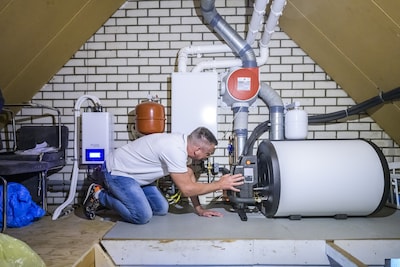
Beginning in 2029, homeowners in the Netherlands must install hybrid heat pumps instead of gas-fired boilers when replacing their heating systems. The government plans to exempt apartments and monuments, while a decision on future subsidies for these costly installations is expected by 2027.

Gall & Gall and Etos websites back online, apps remain unreachable

Gall & Gall and Etos websites back online, apps remain unreachable

The websites for Gall & Gall, Etos, and Albert Heijn are back online following a recent cybersecurity incident at Ahold Delhaize, though some app features and delivery services remain restricted. While the investigation into the cause is ongoing, the company has confirmed no current evidence of data theft and normal supply chain operations have resumed.

Number of cybersecurity companies more than quadrupled in five years

Number of cybersecurity companies more than quadrupled in five years

The number of registered cybersecurity companies in the Netherlands has quadrupled since 2021, reaching 962 by October 2024. This rapid growth is driven by increasing cyber threats and regulatory changes, highlighting the ongoing challenge for organizations to protect their digital systems.