Jacob Nienhuys built 236 high-quality worker homes in the Staatsliedenbuurt, featuring a courtyard, a nursery, and porcelain bathtubs
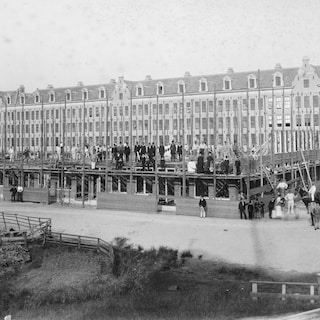
Philanthropist Jacob Nienhuys commissioned the construction of 236 high-quality social housing units in Amsterdam's Staatsliedenbuurt in 1894. The ambitious project featured communal amenities such as a library, a nursery, and a public bathhouse with porcelain tubs before the municipality took over the site in 1921.
Following the 1877 annexation of rural territory, the Staatsliedenbuurt area in Amsterdam was rapidly developed with substandard housing. Contrasting this trend, entrepreneur Jacob Nienhuys funded a philanthropic housing project on a vacant site between Van Reigersbergenstraat and Van Houweningenstraat in 1894. Designed by architect Jan van Looy, the complex provided 236 high-quality residences along with ten retail spaces and extensive communal facilities.
The development was remarkably modern for its time, featuring a library, laundry facilities, a courtyard with a nursery, and a public bathhouse equipped with porcelain tubs for residents and neighbors. Despite these utopian intentions, the project faced challenges as the bathhouse closed by 1920. In 1921, the municipality took ownership of the complex and increased the weekly rents. The site remains a historical landmark, with the former administration building serving various community functions over the years before the entire block was officially designated a municipal monument in 2016.
Based on reporting by parool. Translated and condensed by LocalHeadlines.