nu

'Smart glasses' under fire: Parliament wants stricter ban and lawsuits threaten

'Smart glasses' under fire: Parliament wants stricter ban and lawsuits threaten

The Dutch House of Representatives is seeking stricter regulations on smart glasses that record audio and video, citing significant privacy concerns. Simultaneously, consumer rights organizations have threatened legal action against Meta, demanding a stop to sales of the devices unless privacy protections are improved.

The Dutch House of Representatives has called for a stricter ban on smart glasses equipped with cameras and microphones, citing concerns over privacy and unauthorized recording in public spaces. While State Secretary Claudia van Bruggen initially argued that existing laws were sufficient, she has deferred to the legislative majority's request to explore further regulatory options. The government is expected to report on potential legal actions by the first quarter of 2027, taking into account upcoming guidance from the European Data Protection Board. These regulations would likely exclude devices used as medical aids for visually impaired individuals.

Meanwhile, organizations including the Consumentenbond have issued legal threats against Meta, demanding that the company halt sales of its smart glasses in the Netherlands within two weeks or face litigation. Advocates argue that the discreet nature of these devices facilitates harassment and the unauthorized processing of sensitive personal data. These groups are pushing for immediate intervention to prevent further privacy violations and the normalization of covert recording in daily life.

Based on reporting by nu. Translated and condensed by LocalHeadlines.

Related articles

Seizure of 'Antifa server' at US request leads to questions and concerns

Seizure of 'Antifa server' at US request leads to questions and concerns

Dutch authorities have seized a server belonging to the Italian hosting provider Autistici/Inventati at the request of the United States. The U.S. government classifies the company as a terrorist entity, sparking concerns among Dutch digital rights groups and industry associations regarding the precedent for such cross-border legal actions.

EU selects 46 raw materials projects to reduce dependence on China

EU selects 46 raw materials projects to reduce dependence on China

The European Commission has launched 46 projects across sixteen countries to reduce reliance on China for vital raw materials like lithium and copper. These initiatives, supported by prioritized permits and funding assistance, aim to significantly boost domestic processing and recycling capacity by 2030.

Public Prosecution Service was poorly protected against cyberattacks for years

Public Prosecution Service was poorly protected against cyberattacks for years

An investigation has concluded that the Dutch Public Prosecution Service failed to adequately protect its ICT systems for years, leaving them vulnerable to cyberattacks. A security flaw in Citrix software allowed hackers to infiltrate the network last July, resulting in the delay of thousands of court cases and highlighting long-standing neglected warnings about outdated technology.

VNO-NCW chief warns unions and cabinet: 'We are heading down the Belgian path this way'

VNO-NCW chief warns unions and cabinet: 'We are heading down the Belgian path this way'

VNO-NCW chairman Coen van Oostrom has warned the Dutch government and labor unions that the current economic model is unsustainable and risks leading the country toward a decline similar to Belgium. He calls for urgent structural reforms, including a more efficient social security system and proactive measures to retrain workers for the future of artificial intelligence.

Cabinet plans to require homeowners to install hybrid heat pumps starting in 2029

Cabinet plans to require homeowners to install hybrid heat pumps starting in 2029

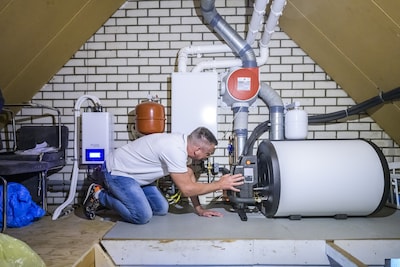
Beginning in 2029, homeowners in the Netherlands must install hybrid heat pumps instead of gas-fired boilers when replacing their heating systems. The government plans to exempt apartments and monuments, while a decision on future subsidies for these costly installations is expected by 2027.