ad

Hack of Danish population register serves as wake-up call for the Netherlands: This could happen here too

Hack of Danish population register serves as wake-up call for the Netherlands: This could happen here too

A major cyberattack on the Danish population register has exposed the data of nine million people after hackers infiltrated the system through a third-party supplier. Cybersecurity experts warn that the Netherlands is similarly vulnerable to such attacks and must urgently re-evaluate its data protection strategies for government systems.

A massive data breach in Denmark has compromised the personal information of nearly nine million people, including names, addresses, and social security numbers. Hackers gained unauthorized access to the central population register by exploiting a legitimate entry point belonging to a third-party company. This incident has raised significant concerns in the Netherlands, where experts warn that the country is equally vulnerable to similar supply-chain attacks. Cybersecurity specialists note that because government databases are often accessed by various organizations and third-party suppliers, the risk of a breach is substantial. Past incidents involving health data and IT systems highlight the reality that supply chains often serve as a weak link. Experts recommend that organizations avoid centralizing sensitive data and instead use distributed storage to minimize potential damage. With rising digital threats from state actors and cybercriminals, officials emphasize that the Danish situation serves as a crucial wake-up call for the Dutch government to strengthen its IT defense systems and monitor third-party security more effectively.

Based on reporting by ad. Translated and condensed by LocalHeadlines.
Related articles

Long wait times at Schiphol due to electronic passport control failure

Long wait times at Schiphol due to electronic passport control failure

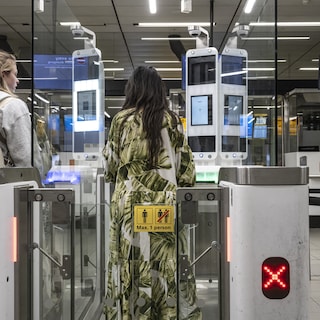
Schiphol Airport is facing significant passenger delays after a technical failure incapacitated its automated eGate passport control system on Sunday morning. Royal Netherlands Marechaussee officers are currently conducting manual checks as they investigate the cause of the malfunction, which is not believed to be a cyberattack.

Seizure of 'Antifa server' at US request leads to questions and concerns

Seizure of 'Antifa server' at US request leads to questions and concerns

Dutch authorities have seized a server belonging to the Italian hosting provider Autistici/Inventati at the request of the United States. The U.S. government classifies the company as a terrorist entity, sparking concerns among Dutch digital rights groups and industry associations regarding the precedent for such cross-border legal actions.

ETIAS travel authorization not yet mandatory, but fake websites are already offering them

ETIAS travel authorization not yet mandatory, but fake websites are already offering them

Authorities warn that over 150 fraudulent websites are currently offering fake ETIAS travel authorizations, despite the official system not yet being active. Travelers are advised that when the program launches in 2027, they should only use the designated official European Union website to avoid financial scams and data theft.

Empty shelves, saunas in the coolers: our essential services are vulnerable to cyber incidents

Empty shelves, saunas in the coolers: our essential services are vulnerable to cyber incidents

The grocery sector is increasingly facing cybersecurity threats, leading to incidents such as empty store shelves and malfunctioning cooling equipment. Experts warn that these vulnerabilities in essential services could cause further public instability if security measures are not improved.

Meta has no plans to pull controversial smart glasses from the market

Meta has no plans to pull controversial smart glasses from the market

Meta refuses to withdraw its smart glasses from the market despite intense criticism from Dutch privacy organizations regarding the potential for covert filming. In response, these groups are initiating legal proceedings against the company, even as Meta insists that its built-in safety features and local storage policies are sufficient.