nu

Albert Heijn parent company acquires hundreds of Eastern European Tesco stores

Albert Heijn parent company acquires hundreds of Eastern European Tesco stores

Ahold Delhaize has agreed to acquire more than 360 Tesco stores in Eastern Europe, a move expected to generate 3.5 billion euros in annual revenue. The deal aims to strengthen Ahold Delhaize's position in Central and Southeast Europe and is anticipated to close in late 2027.

Ahold Delhaize, the parent company of Albert Heijn, has announced a major expansion strategy by acquiring over 360 Tesco stores across Eastern Europe. This transaction encompasses a diverse range of outlets, including hypermarkets, supermarkets, and more than one hundred franchise locations. These combined operations currently generate an annual revenue of approximately 3.5 billion euros and employ a workforce of over fourteen thousand individuals. Frans Muller, the CEO of Ahold Delhaize, stated that this acquisition serves as a strategic move to significantly bolster the company's market presence throughout Central and Southeast Europe.

For Tesco, the divestment represents a calculated shift in focus toward their core business activities within the United Kingdom and Ireland. The transition is scheduled to conclude during the second half of 2027, provided that the deal receives the necessary regulatory approvals. Both companies are currently preparing for the complex integration process that will follow the official closing of the transaction.

Based on reporting by nu. Translated and condensed by LocalHeadlines.

Related articles

Q&A | Oil companies make mega profits, but gas remains expensive: how is that possible?

Q&A | Oil companies make mega profits, but gas remains expensive: how is that possible?

Major oil companies have generated substantial profits globally due to refining shortages and high market prices caused by international conflicts. Experts suggest that government intervention is difficult because fuel prices are tied to global markets, and strict regulations could discourage these companies from operating domestically.

Wooden houses are gaining ground but won't solve the housing shortage

Wooden houses are gaining ground but won't solve the housing shortage

The share of new wooden residential construction in the Netherlands has grown significantly due to sustainability mandates and an emphasis on industrial prefabrication. However, experts caution that limited production capacity and high costs mean that timber building alone cannot resolve the country's persistent housing shortage.

0.0 with nectarine or sports beer with extra vitamin C: Heineken goes all-in on non-alcoholic options

0.0 with nectarine or sports beer with extra vitamin C: Heineken goes all-in on non-alcoholic options

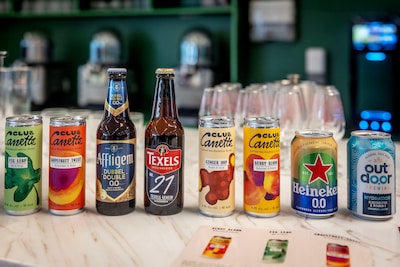
Heineken is launching twelve new non-alcoholic drinks, including flavored beers and sport-focused beverages, to capitalize on the growing demand for alcohol-free options in the Netherlands. The company aims to make non-alcoholic beer a standard choice for occasions like lunch or post-exercise recovery as the market segment continues to expand.

Hack and billion-dollar heist at Binance show who is really in control of your crypto

Hack and billion-dollar heist at Binance show who is really in control of your crypto

Billions of euros in cryptocurrency were stolen from the exchange Binance in a major hack, raising concerns about the centralized security of digital assets. While the platform has promised to reimburse customers, the incident underscores the vulnerability of storing funds in exchange-held wallets rather than personal hardware devices.

France recalls even more condoms due to risk of tearing

France recalls even more condoms due to risk of tearing

France has recalled seven million condoms across Europe due to manufacturing flaws that cause the latex to tear, posing risks of pregnancy and disease. Dutch authorities are currently investigating the situation to determine if similar measures are required in the Netherlands.