nu

Quarter of employers struggle with staff shortages, especially in construction

Quarter of employers struggle with staff shortages, especially in construction

A TNO study indicates that one-quarter of Dutch employers struggle with staff shortages, which acts as a major barrier to innovation, especially in the construction and industrial sectors. Additionally, 22 percent of companies report that a lack of financial resources also limits their ability to improve products and services.

Research from the TNO institute reveals that one in four employers in the Netherlands currently struggles with staffing shortages, which significantly hinders their ability to innovate. This issue is particularly acute in the construction and industrial sectors, where approximately one-third of employers report difficulty finding necessary talent. Larger organizations with 250 or more employees are disproportionately affected, with 40 percent citing labor gaps as a primary barrier to updating their products, services, or internal processes. While the overall decline in innovation noted since 2010 has stabilized, progress remains stagnant due to these practical constraints.

Beyond labor shortages, financial limitations also pose a significant challenge for businesses, with 22 percent of all employers identifying a lack of funding as a hurdle. This financial strain is most prevalent within the agricultural, healthcare, ICT, and recreation industries. Despite these ongoing challenges, researchers noted that the long-term decline in corporate innovation has finally begun to plateau, though firms continue to grapple with fundamental operational obstacles.

Based on reporting by nu. Translated and condensed by LocalHeadlines.

Related articles

Booking.com parent company sees travel decline due to unrest in Paris and other factors

Booking.com parent company sees travel decline due to unrest in Paris and other factors

Booking Holdings reported a 7 percent drop in quarterly bookings due to decreased international travel demand, regional instability in the Middle East, and social unrest in European cities. Additionally, the company's financial results were impacted by legal costs related to an FTC investigation into hotel pricing, even as they recently won a domestic court case regarding their remote work policy.

Cyber incident costs Albert Heijn parent company millions, but Ahold still aims for growth

Cyber incident costs Albert Heijn parent company millions, but Ahold still aims for growth

Ahold Delhaize expects to lose up to 250 million euros in revenue following a major cyberattack that disrupted operations at its supermarket chains. Despite the financial impact, the company is pursuing further growth by acquiring Tesco's operations in the Czech Republic and Slovakia while maintaining steady global revenue gains.

Ahold Delhaize: cyberattack impact on fourth-quarter sales estimated at 200 to 250 million euros

Ahold Delhaize: cyberattack impact on fourth-quarter sales estimated at 200 to 250 million euros

Retail conglomerate Ahold Delhaize expects a financial hit of up to 250 million euros in the fourth quarter following a recent cyberattack. The security incident forced the company to disable systems and halt distribution, resulting in widespread operational disruptions for its brands, including Albert Heijn.

From near-death to national icon: how Hema fought its way back with smoked sausage, tompouce and pragmatism

From near-death to national icon: how Hema fought its way back with smoked sausage, tompouce and pragmatism

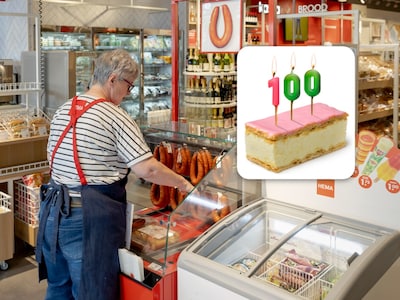
The Dutch retail chain Hema is celebrating its 100th anniversary today. After appearing to be near bankruptcy just a few years ago, the company has successfully revitalized its brand identity.

Groceries slightly cheaper, but inflation in the Netherlands rising again

Groceries slightly cheaper, but inflation in the Netherlands rising again

Inflation in the Netherlands rose to 3.7 percent in October, surpassing the 3.4 percent rate recorded in September. While grocery prices showed a slight decrease, overall costs increased due to rising prices for energy and motor fuels.