ad

New twist in tax plan soap: D66 open to millionaire's tax, while VVD remains opposed
New twist in tax plan soap: D66 open to millionaire's tax, while VVD remains opposed

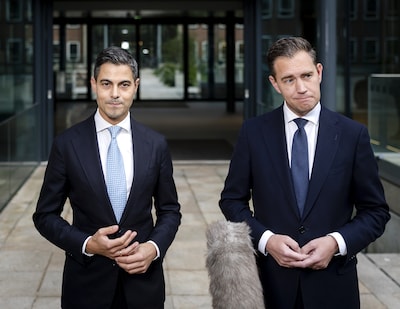
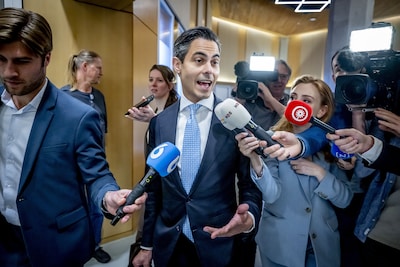
A proposal by opposition parties to introduce a millionaire's tax in exchange for supporting the cabinet's budget has caused a deep rift within the Dutch coalition. While D66 and the CDA are open to negotiations, the VVD rejects the plan, creating significant uncertainty regarding the government's stability and its ability to secure a parliamentary majority.

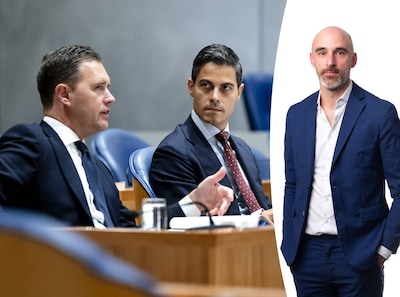
The Dutch coalition is facing significant internal tension over a new tax plan proposal from opposition parties PRO and Volt. These parties are offering to support the government's tax package in exchange for the implementation of a new tax on millionaires, which would include higher levies on inheritances and a 45 percent top rate on assets in box 3. While D66 and the CDA have expressed a willingness to discuss these measures, the VVD remains strongly opposed, labeling such taxes unacceptable. This disagreement has sparked concerns about the potential for the coalition to fracture, with some members suggesting that coalition partners might even cast split votes on the matter.

The situation is further complicated by the government's need for opposition support to pass its broader tax plans in Parliament. While the coalition could theoretically seek support from right-wing parties like the BBB, JA21, and SGP, the demands of those parties—which include ending the asylum dispersal law and relaxing nitrogen policies—are considered non-negotiable by the government. As a result, the coalition is struggling to navigate a path forward, leaving the stability of the minority cabinet increasingly uncertain as debates continue.

Based on reporting by ad. Translated and condensed by LocalHeadlines.
Related articles

Rolling Stones fan and averse to power politics: why Klaas Knot is fighting his stern image

Rolling Stones fan and averse to power politics: why Klaas Knot is fighting his stern image

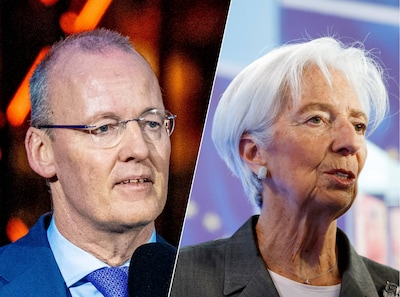
Klaas Knot has been formally nominated by the Netherlands as a candidate for the presidency of the European Central Bank. While recognized for his professional expertise, Knot is currently working to overcome a reputation for being overly stern.

Make or break: Cabinet has no deal, now it is up to the House of Representatives regarding the tax plan

Make or break: Cabinet has no deal, now it is up to the House of Representatives regarding the tax plan

The Dutch minority government faces a critical test in the Tweede Kamer as it attempts to pass a tax plan without a prior deal with opposition parties. The outcome of the upcoming vote is seen as a major challenge to the stability of the current cabinet, as factions on both the left and right present conflicting demands.

Political crisis ahead? Dutch parliament to decide fate of cabinet during tax debate

Political crisis ahead? Dutch parliament to decide fate of cabinet during tax debate

The Dutch cabinet faces a critical test today as parliament debates the 2027 Tax Plan, which serves as a make-or-break moment for the minority government. The coalition must navigate conflicting demands from opposition parties to secure a majority and avoid a major political crisis.

Netherlands officially nominates Klaas Knot as candidate for ECB president

Netherlands officially nominates Klaas Knot as candidate for ECB president

The Dutch government has officially nominated Klaas Knot as a candidate for the presidency of the European Central Bank to replace outgoing president Christine Lagarde. European finance ministers will review the candidates in November, with a final decision expected from the European Council in mid-December.

Farming families have suffered greatly from an unreliable government for a decade

Farming families have suffered greatly from an unreliable government for a decade

National Ombudsman Reinier van Zutphen reports that Dutch farming families have endured a decade of stress and uncertainty due to inconsistent and unreliable government agricultural policies. Frequent rule changes and unkept promises have undermined business stability and caused significant personal strain, leading the ombudsman to call for clearer and more empathetic governance.