ad

Statusholder granted more time for civic integration
Statusholder granted more time for civic integration

The Dutch government is extending the integration deadline by three years for status holders who are already in the workforce to help them balance employment with language requirements. This policy aims to address high unemployment among asylum seekers and better utilize their skills in sectors facing labor shortages.

The Dutch government has decided to extend the integration deadline for status holders who are currently employed by an additional three years. This policy change aims to facilitate the integration process by allowing asylum seekers with residence permits to prioritize working while learning the language, as combining mandatory language classes with a full-time job has proven difficult under the current three-year limit. Failure to meet the original deadline previously carried risks of fines or the potential loss of residency status.

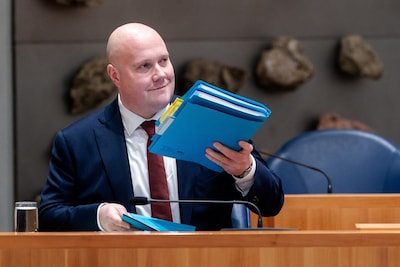
Recent data from the Court of Audit highlighted that only 28 percent of status holders find paid employment within their first three years, despite labor shortages in sectors like healthcare and construction. Minister Thierry Aartsen stated that early employment helps newcomers master the language through daily practice and improves social cohesion. Beginning next year, larger reception centers will also feature support desks to assist asylum seekers with language training and job searching. However, the extended deadline specifically applies only to those who are already employed.

Based on reporting by ad. Translated and condensed by LocalHeadlines.

Related articles

Alderman must fix budget error again: general reserve estimated too optimistically

Alderman must fix budget error again: general reserve estimated too optimistically

The Amsterdam municipality has discovered a budgetary error resulting in a general reserve shortfall of 70 to 140 million euros. Finance Councilor Hendrik Jan Biemond has apologized for the lapse and pledged to improve internal controls following a series of recent fiscal mistakes.

How do we protect the North Sea 24/7? Defense seeks answers from the Marineterrein

How do we protect the North Sea 24/7? Defense seeks answers from the Marineterrein

The Dutch Ministry of Defence is launching the National Institute for Defence Technology with a 350 million euro annual budget to stimulate domestic military innovation. The proposed headquarters for this new institute is the Marineterrein in Amsterdam, with an immediate focus on developing technology to protect North Sea infrastructure from potential foreign threats.

America has the internet and COVID vaccines to thank for it, now the Netherlands has such an institute too

America has the internet and COVID vaccines to thank for it, now the Netherlands has such an institute too

The Netherlands has established the Netherlands Institute for Defense Technology (NIDT), an innovation agency modeled after the American DARPA to foster cutting-edge military advancements. Its first major initiative focuses on developing autonomous systems and sensors to protect critical infrastructure in the North Sea.

Back to the backrooms: divided coalition must now find a way out of tax maze

Back to the backrooms: divided coalition must now find a way out of tax maze

The Dutch coalition government remains deadlocked over its tax plans after a failed debate, struggling to reconcile internal differences regarding a proposed millionaire tax. With voting approaching, parties must now negotiate behind the scenes to secure the necessary parliamentary support while avoiding a coalition split.

More screen time, less outdoor play: Amsterdam takes action

More screen time, less outdoor play: Amsterdam takes action

Amsterdam has appointed a special councilor for outdoor play to combat the trend of children spending excessive time on digital devices. The initiative aims to address playground inequality and urban congestion while encouraging families to prioritize physical activity for better child development.