The East India House was once the monastery of the Saint Paul Brothers
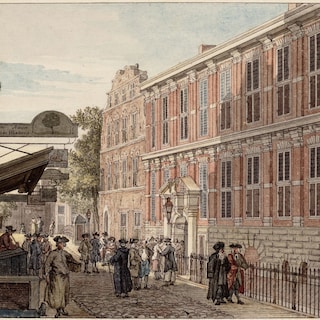
Following the 1578 Alteratie, Amsterdam seized control of Catholic religious sites, including the Sint-Paulusbroeders monastery. This location was later utilized by the Dutch East India Company and eventually became the Oost-Indisch Huis, which is now owned by the University of Amsterdam.
In 1578, Amsterdam underwent a political transition known as the Alteratie, which resulted in the removal of the Catholic city government and the secularization of religious properties. Among the affected sites was the monastery of the Sint-Paulusbroeders, established in 1409. The city had previously acquired portions of the monastic land to build the Bushuis, a facility used for storing ammunition and artillery. By 1603, this site was leased to the newly formed Dutch East India Company, or VOC, which became a cornerstone of the nation's economic success through global trade. The company expanded the site with additional wings and a courtyard, eventually purchasing the entire complex in 1720. Following the collapse of the VOC in 1799, the building housed the colonial administration. Since 1965, the structure, now known as the Oost-Indisch Huis, has been owned by the University of Amsterdam, which has utilized the historic space for academic purposes since 1962.
Based on reporting by parool. Translated and condensed by LocalHeadlines.