EU enlargement costs money but is of great geopolitical importance
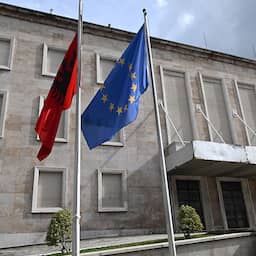
The European Commission plans for Montenegro and Albania to join the EU by 2028 and 2029 to counter Russian and Chinese influence in the Balkans. Despite skepticism regarding the financial costs and potential democratic backsliding, supporters emphasize the geopolitical and economic benefits of expanding the European bloc.
The European Commission has proposed a timeline for the potential accession of Montenegro in 2028 and Albania in 2029. Experts argue this expansion is essential to counter the growing influence of Russia and China in the Balkans, regions where the European Union has recently lost strategic ground. By integrating these nations, the EU aims to bolster its democratic bloc and strengthen its internal market, which would indirectly benefit member states like the Netherlands. While critics worry about the financial burden on the Netherlands as a net contributor, proponents suggest that these small economies will not create significant costs compared to future potential members.
Concerns regarding democratic stability persist, particularly regarding the risk of backsliding as seen in other member states. To mitigate this, the EU is developing stricter mechanisms, such as stripping voting rights or funding from countries that fail to uphold democratic standards. Accession remains subject to rigorous criteria, and every member state, including the Netherlands, retains the right to veto the process if requirements are not met.
Based on reporting by nu. Translated and condensed by LocalHeadlines.