haarlemsdagblad

Merz re-elected CDU leader with 91 percent of the vote
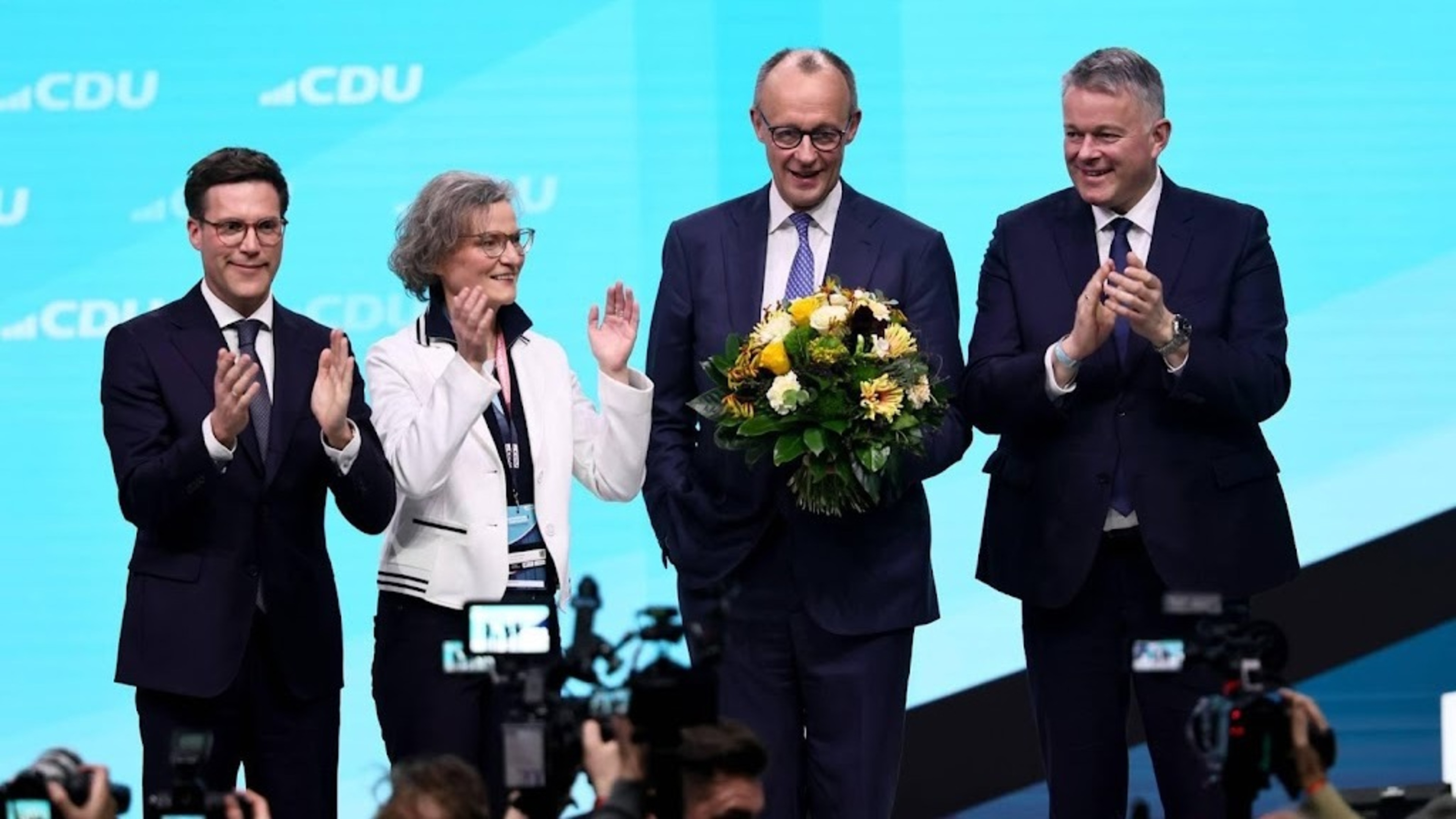
Merz re-elected CDU leader with 91 percent of the vote

Friedrich Merz has been re-elected as the chairman of Germany’s Christian Democratic Union (CDU) after securing 91 percent of the vote at the party's congress. This result confirms his continued leadership, following previous election support levels of 94.6 percent in 2022 and 90 percent in 2024.

Related articles

New aldermen Wiedemeijer and Çimen get to work: 'Grand visions are for the attic'

New aldermen Wiedemeijer and Çimen get to work: 'Grand visions are for the attic'

Maarten Wiedemeijer and Meryem Çimen have been installed as new aldermen in the Haarlem municipal executive. Both individuals are experienced former council members who aim to bring a pragmatic approach to the city's governance. They expressed confidence in their ability to work together effectively despite potential political differences.

Orbán remains Fidesz leader despite election defeat

Orbán remains Fidesz leader despite election defeat

Viktor Orbán has been reappointed as the leader of the right-nationalist Fidesz party despite a recent parliamentary election defeat. Delegates at a party congress voted almost unanimously for his reappointment, facing no opposing candidates.

Britt van den Dobbelsteen hero for Olympiacos Piraeus in Champions League final

Britt van den Dobbelsteen hero for Olympiacos Piraeus in Champions League final

Dutch goalkeeper Britt van den Dobbelsteen led Olympiacos Piraeus to a Champions League title by saving three consecutive penalties in a shootout. The 23-year-old, who entered the game specifically for the penalties, expressed her disbelief at the achievement the following day.

Prince Harry travels to UK without family due to security concerns

Prince Harry travels to UK without family due to security concerns

Prince Harry will travel to the United Kingdom next month without his wife, Meghan Markle, and their two children. The decision for the family to stay home is reportedly due to ongoing security concerns.

New language requirement primarily meant to look strict

New language requirement primarily meant to look strict

The Dutch national government is proposing a revised language requirement for welfare recipients that aims to balance political demands for stricter rules with practical concerns from municipalities. The new policy is designed to appear more rigorous while simultaneously offering flexibility to resolve long-standing implementation issues.