Life discovered on Rembrandt's The Night Watch: Japanese bacterium from 2013
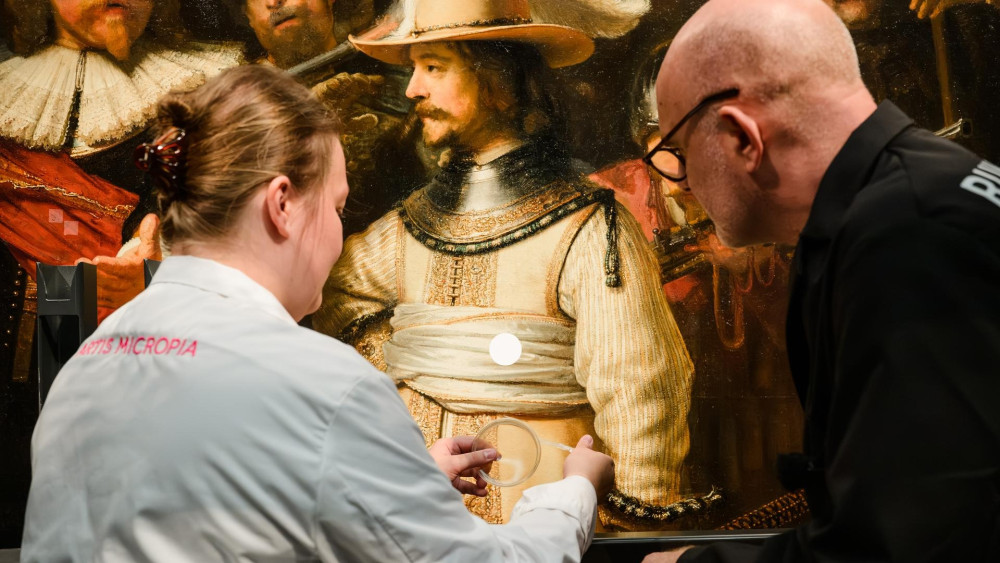
Microbiologists from Micropia and the Rijksmuseum have identified various bacteria living on Rembrandt's The Night Watch, including a strain previously discovered at a Japanese refinery. These findings, which showcase the unexpected intersection of art and microbiology, are currently on public display at Micropia in Amsterdam.
Microbiologists from Micropia and restorers from the Rijksmuseum have collaborated to analyze the invisible microbial life present on Rembrandt's masterpiece, The Night Watch. By collecting samples from approximately sixty locations across the painting over a six-month period, the team identified a diverse range of microbes. The findings include common skin bacteria and a specific bacterial strain originally discovered at a Japanese sugar refinery in 2013, which was located on a section of the canvas where the protective varnish had been removed.
Rembrandt painted the work in 1642, long before the existence of microbes was scientifically documented by Antoni van Leeuwenhoek. This research highlights the intersection between art and science, proving that even iconic historical works host active biological communities. The cultivated microbes are currently on display at the Micropia museum in Amsterdam, where they will remain accessible to the public until the end of May.
Based on reporting by rss. Translated and condensed by LocalHeadlines.